Kenilworth Locksmith Service Team
Local locksmith team
14 Oct 2026 11 min read
If your home insurer has ever asked whether your front door has a BS3621 lock, you are not alone. It is one of the most common questions homeowners in Kenilworth face when taking out or renewing a buildings or contents policy — and one of the least well explained. The short answer is that a BS3621 mortice deadlock is a British Standard that tells your insurer the lock on your door meets a proven minimum level of security. The longer answer involves understanding what that standard actually means, how to check whether your existing lock qualifies, and what to do if it does not.
This guide is written for homeowners, tenants, and landlords across Kenilworth and the surrounding area — from properties along The Chase and Castle Road to modern builds closer to the A452. Whether your front door is a traditional timber door with a mortice lock, or a newer uPVC or composite door, the information below will help you make sense of your insurance requirements and take practical steps to satisfy them.
## What BS3621 Actually Means — and Why Insurers Care
BS3621 is a British Standard specification published by the British Standards Institution. It applies to thief-resistant lock assemblies for hinged doors — in plain language, mortice deadlocks fitted into the body of a timber door. To carry the BS3621 mark, a lock must meet a strict set of requirements: it must have a minimum of five levers, the bolt must be hardened against sawing, the keyhole must be protected against picking and manipulation, and the lock case itself must be strong enough to resist being forced. When a lock passes all these tests, it is stamped or packaged with the BS3621 kite mark.
Home insurers ask for BS3621 because it gives them objective evidence that your front door lock has been independently tested to resist the most common forms of forced entry. Without that standard, two five-lever mortice locks that look identical on a shelf can perform very differently under attack. Insurers writing policies for properties in towns like Kenilworth want assurance that a claim is not more likely simply because a cheaper, untested lock was fitted. Some policies treat BS3621 as a recommendation; others make it a condition of cover. Failing to meet a stated condition can mean a claim is reduced or refused — which is why it is worth checking now rather than after a break-in.
## How to Check Whether Your Current Lock Qualifies
The quickest way to check is to look at the lock faceplate — the narrow metal strip visible on the edge of the door when it is closed. On a qualifying lock, the BS3621 kite mark (a stylised kite shape containing the letters BSI) is usually stamped or engraved there. You may also find it on the lock body itself if you remove the door furniture, or on the original packaging if you still have it. If you are unsure, the lock manufacturer's name stamped on the faceplate combined with the model number can be searched to confirm whether that specific model meets the standard.
A few practical points worth knowing: first, the kite mark must be on the lock itself — a certificate or receipt from a previous owner is not sufficient evidence for most insurers. Second, some older five-lever locks were made to good quality but predate the current BS3621 edition; your insurer may or may not accept these, so it is worth asking them directly. Third, if your front door is uPVC or composite, it almost certainly does not have a BS3621 mortice lock at all — it will have a multipoint locking mechanism operated by a euro cylinder. In that case, the relevant standards are different (more on that below). If you are in any doubt about what you have, our team at Kenilworth Locksmith can visit, assess your existing locks, and give you an honest assessment with no obligation to proceed — call us on 01926 567506.
## uPVC and Composite Doors — A Different Set of Rules
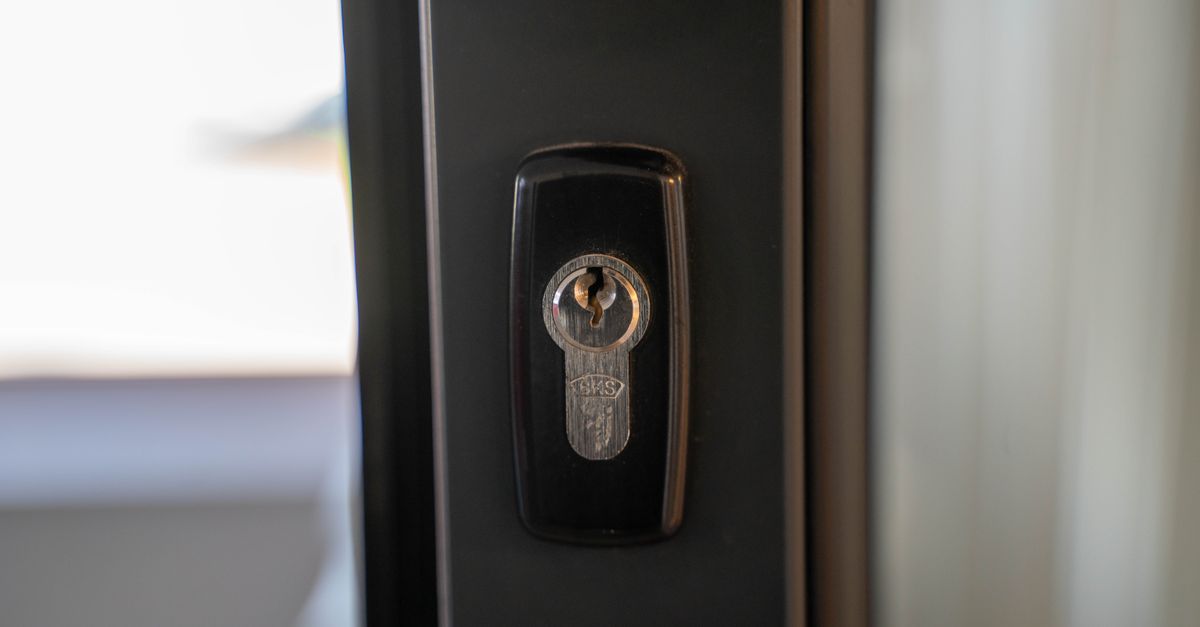
Because uPVC and composite doors use a multipoint locking system rather than a traditional mortice lock, BS3621 does not directly apply to them. The multipoint lock engages several hooks or bolts along the full height of the door frame when the handle is lifted and the key turned, which offers good resistance to being forced open — but the euro cylinder that operates the mechanism introduces a different vulnerability: cylinder snapping.
Cylinder snapping is a technique where the cylinder is broken in half using simple tools, exposing the internal mechanism and allowing the door to be opened without a key. It is a well-documented method of entry used by burglars across the Midlands and throughout the UK. The practical solution is to fit an anti-snap, anti-pick, anti-drill cylinder that meets the TS007 3-star rating — a British Standard that covers exactly these attack methods for euro cylinders. Many insurers are now asking about this alongside or instead of BS3621 for uPVC doors. If your door has a standard euro cylinder with no visible anti-snap features, an upvc door lock repair Kenilworth appointment to swap it for a 3-star rated cylinder is a straightforward and genuinely worthwhile upgrade. We carry suitable cylinders and can fit them on the same visit.
## What Happens if Your Lock Does Not Meet the Standard — Lock Change Kenilworth
If you discover your front door lock does not carry the BS3621 kite mark, or that your euro cylinder is not anti-snap rated, the solution is straightforward: a lock change Kenilworth or a door lock replacement Kenilworth, depending on your door type. For a timber door, this usually means fitting a new five-lever BS3621 mortice deadlock in place of the existing lock. For a uPVC or composite door, it typically means swapping the euro cylinder for a TS007 3-star rated anti-snap version — a job that takes around 20 to 30 minutes in most cases.
The cost of a lock change depends on a number of factors: the type and age of your door, the specific lock or cylinder required, whether the existing lock needs any remedial work to the door before fitting, and whether the work is carried out during the working day or in the evening or at a weekend. At Kenilworth Locksmith we always confirm the exact price before any work begins, so there are no surprises on the invoice. Once the work is done, we can provide written confirmation of what has been fitted, which you can pass on to your insurer as evidence that the BS3621 or TS007 requirement has been met. For bookings or questions, ring us on 01926 567506 — we are available 24 hours a day, every day of the year including bank holidays.
## Beyond the Front Door — a Broader Look at Home Security in Kenilworth
Satisfying your insurer's lock requirements is a sensible starting point, but it is worth taking a broader view of your home's security while you are thinking about it. Back doors — often uPVC patio or French doors — are a common point of entry, and they are frequently fitted with the same standard euro cylinders that the front door has. Communal entrance doors in blocks of flats on roads like Abbey End or Warwick Road may meet a minimum standard set by the building owner or managing agent, but your individual flat door is your own responsibility as a tenant or leaseholder.
Our residential locksmith services cover all of these scenarios: front door lock upgrades, back and side door assessments, letterbox restrictors, door chain and hinge bolt fitting, and emergency boarding where a door has been damaged. We also work with landlords and letting agents across the Kenilworth area who need locks changed between tenancies — a legal obligation where previous tenants have not returned all sets of keys. For any property or tenancy situation, the right starting point is a conversation with our team about what your specific door and lock arrangement actually needs, rather than a one-size-fits-all approach. And if you ever find yourself locked out Kenilworth — perhaps after a late night or a lost key — we operate as a genuine 24 hour locksmith Kenilworth, dispatching a skilled locksmith straight away and aiming to be with you in around 30 minutes.
## Emergency Locksmith Kenilworth — When You Need Help Right Now
Lock and door problems rarely happen at a convenient time. A front door that will not lock properly at 10pm on a Sunday is both a security risk and a stressful situation, and it is exactly the kind of job our emergency locksmith Kenilworth service exists for. Whether it is a broken key in the lock, a damaged multipoint mechanism on a uPVC door, or a lock that has simply failed and will not engage, we attend emergencies across Kenilworth and the surrounding villages — including Leamington Spa, Warwick, Balsall Common, and Burton Green — around the clock.
We also provide emergency boarding services where a door or window has been damaged by a break-in or an accident and needs to be made secure before a permanent repair can be arranged. This is a particularly important service for properties that are rented out or temporarily unoccupied, where leaving a compromised door overnight is simply not an option. As a fully insured, experienced mobile locksmith team, we bring the right tools and materials to each job and work to leave the property secure before we leave — whatever the hour. Call 01926 567506 and we will send someone out straight away.
Frequently asked questions
Does every home insurance policy in the UK require a BS3621 lock?+
Not every policy makes it a strict condition, but a large number of UK home insurers either require it or strongly recommend it as a minimum standard for the front door lock on a timber door. The exact wording varies between policies — some use phrases like 'five-lever mortice deadlock to BS3621', while others simply ask for a 'British Standard approved lock'. The safest approach is to read the security conditions section of your own policy document carefully. If the wording is unclear, contact your insurer directly and ask them to confirm in writing what they require. If your lock does not currently qualify, a lock change is the straightforward solution — and once it is fitted, we can provide written confirmation of what has been installed.
My front door is uPVC — does BS3621 apply to me?+
BS3621 applies specifically to mortice deadlocks fitted into timber doors, so it does not directly cover uPVC or composite doors with multipoint locking systems. For those door types, the more relevant standard is TS007 3-star for the euro cylinder that operates the multipoint lock. The key risk on uPVC doors is cylinder snapping, where the cylinder is broken to gain entry without a key. Fitting an anti-snap, anti-pick, anti-drill cylinder that carries the TS007 3-star rating addresses this risk and is what many insurers now look for on uPVC and composite doors. If you are unsure what your door currently has, we are happy to come and assess it — ring us on 01926 567506.
Can I check and replace a lock myself to save money?+
You can certainly check whether your existing lock carries the BS3621 kite mark yourself — look at the faceplate on the edge of the door or the lock body. Replacing a lock is technically possible as a DIY task on a simple timber door if you are confident with basic carpentry, but there are real risks: fitting the wrong size lock, misaligning the bolt with the keep in the door frame, or using a lock that looks similar to the old one but does not carry the correct standard can all create problems — including invalidating your insurance if the replacement does not meet the stated requirement. For a uPVC door, swapping a euro cylinder is simpler, but selecting the correct size is essential and fitting an ill-fitting cylinder can compromise the anti-snap protection you are trying to gain. Having a professional fit the lock and provide written confirmation of what was installed gives you something concrete to show your insurer.
What is the difference between a nightlatch and a BS3621 mortice deadlock?+
A nightlatch — sometimes called a Yale lock — is a spring-loaded latch that sits on the surface of the door and locks automatically when the door is pulled shut. It can typically be opened from the inside without a key, which is useful for everyday use, but it offers limited resistance to forcing because the latch bolt can often be pushed back without the key. A BS3621 mortice deadlock is a separate lock that sits inside the body of the door, with a solid bolt that shoots out when the key is turned and cannot be retracted without the key from either side. Most insurers expect both to be present on a timber front door — the nightlatch for convenience and the mortice deadlock as the primary security lock. If your front door only has one or the other, it is worth having both fitted.